
Origins and typewriters
Izarra was established in Zamudio as a supplier and service company for office machinery. The original premises were later occupied by Matrici, an industrial company that remains associated with the site.
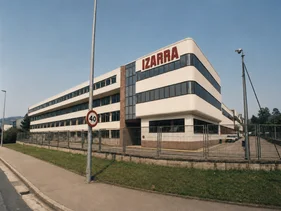
The company's first products were electronic typewriters for office use. Izarra also carried out component work for Olivetti and maintained equipment for local customers.
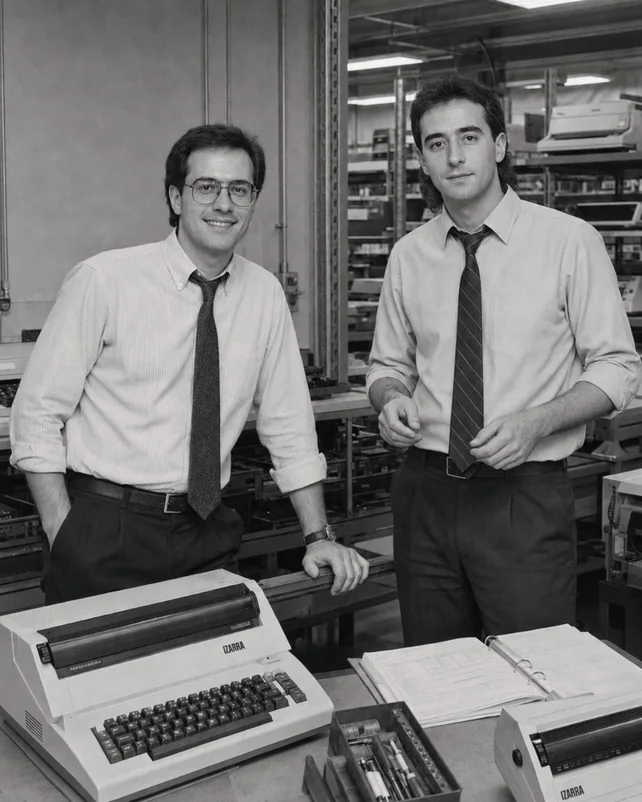
As personal computers displaced typewriters in the late 1980s, Izarra moved into computer workstations.
Development of the computer line
Izarra built its computers as integrated systems rather than rebadged PC compatibles, assembling them at its own premises in Zamudio. The machines used standard expansion buses and ran DOS software, but Izarra wrote its own firmware and TokaDOS environment and designed its own graphics hardware.
The first three models were the 286-based Izarra1000, the 386-based Izarra2000, and the 486-based Izarra2700. They were sold as professional systems to schools, offices, and engineering firms.
In a 1994 interview with MundoPC, Etxeberria said that Izarra hoped to become a household name in Spain, comparable to Amstrad in the United Kingdom or Commodore in the United States.
Izarra3000
The Izarra3000 was the fourth system in the series. Contemporary descriptions specified a 586-class processor, 16 or 24 MB of memory in the base configuration, SCSI storage, integrated Ethernet, proprietary graphics with 3D acceleration, and expansion through PCI and ISA.
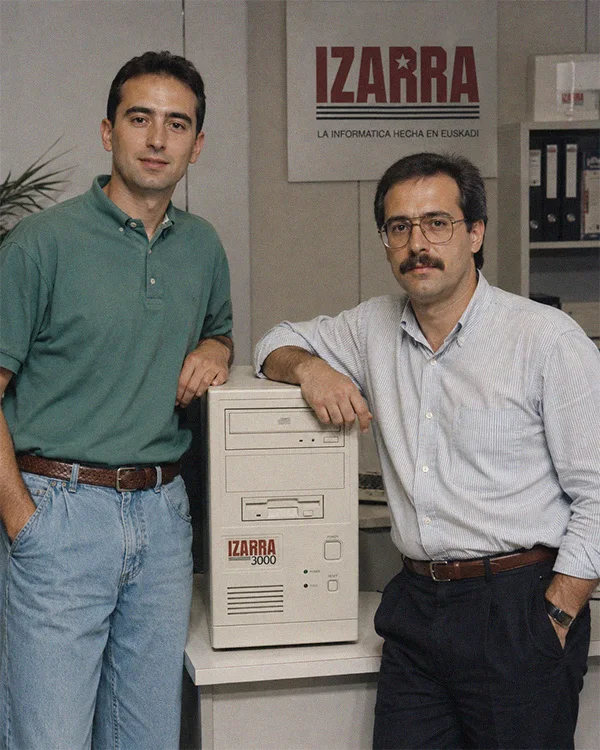
The operating environment was to be TokaDOS 3.0. It kept a command-line interface for compatibility with existing DOS applications and added an optional graphical interface. Izarra also planned its own BIOS, VEGA graphics, and ReSonique II sound hardware.
The machine was initially expected during the first half of 1996. It continued to appear in the specialist press into 1997, but no commercial release followed.
Cancellation
The Izarra3000 was developed while the desktop market was consolidating around standard PC hardware and Microsoft Windows. Its custom components made the system expensive, and TokaDOS could not run Windows 95, which buyers had come to expect.
Izarra ended the project without putting the 3000 into production. IzarraVM is based on the photographs, manuals, and firmware that survived.
Computer line

| Year | Model | Description |
|---|---|---|
| 1990 | Izarra1000 | 286-based workstation for schools and small offices. |
| 1992 | Izarra2000 | 386-based workstation intended for more demanding DOS software. |
| 1994 | Izarra2700 | 486-based workstation for office and multimedia use. |
| 1997 | Izarra3000 | 586-class TokaDOS 3.0 system shown publicly but never released. |